The Belonging Tree
MFA Thesis Project
Summary
Quick Facts
Project by Shawki Izzat
My Role(s): Product Researcher, Design Engineer, Creative Technologist
Tools Used: Supabase, Javascript, Python
Release: May 2026
Timeline: 12 months
Description
The Belonging Tree is an interactive installation and web-based data visualization that explores global interconnectedness and identity through migration and movement. Framed as a collaborative digital artwork, the project invites participants, especially those with multicultural backgrounds, to reflect on the countries that have influenced their sense of self. Through individual inputs, users contribute to the growth of a shared, evolving tree, where each entry becomes part of a collective structure. By aggregating personal narratives into a living visualization, The Belonging Tree reveals that despite our varied backgrounds and the many places we come from, we are united by a shared humanity—seeking connection, meaning, and a sense of belonging in the same world.
This project was submitted as part of my MFA thesis requirement at Parsons School of Design.
Context and User Journey
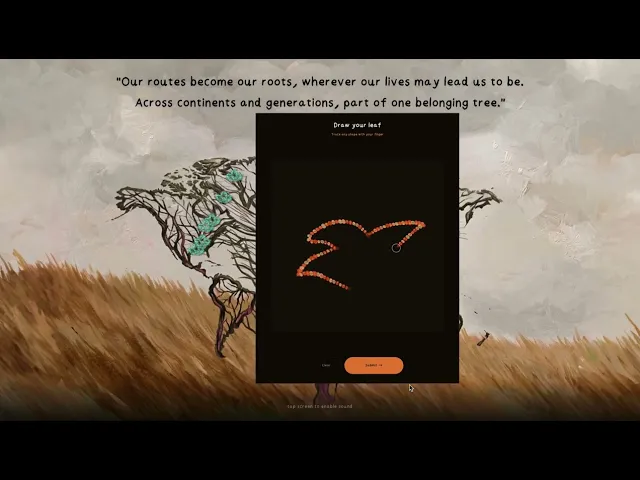
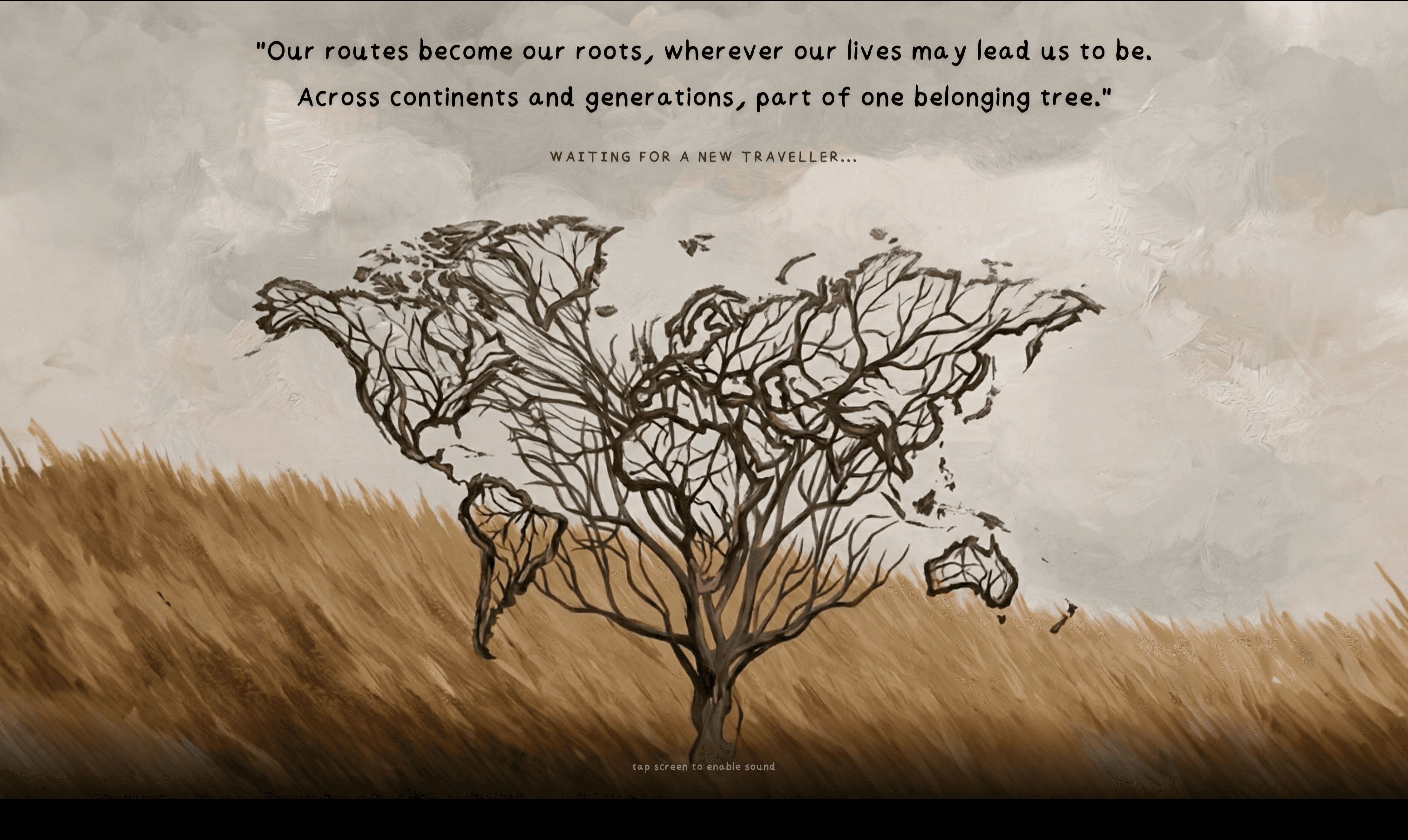
The installation has two main components: A tree map visualization and a control panel.
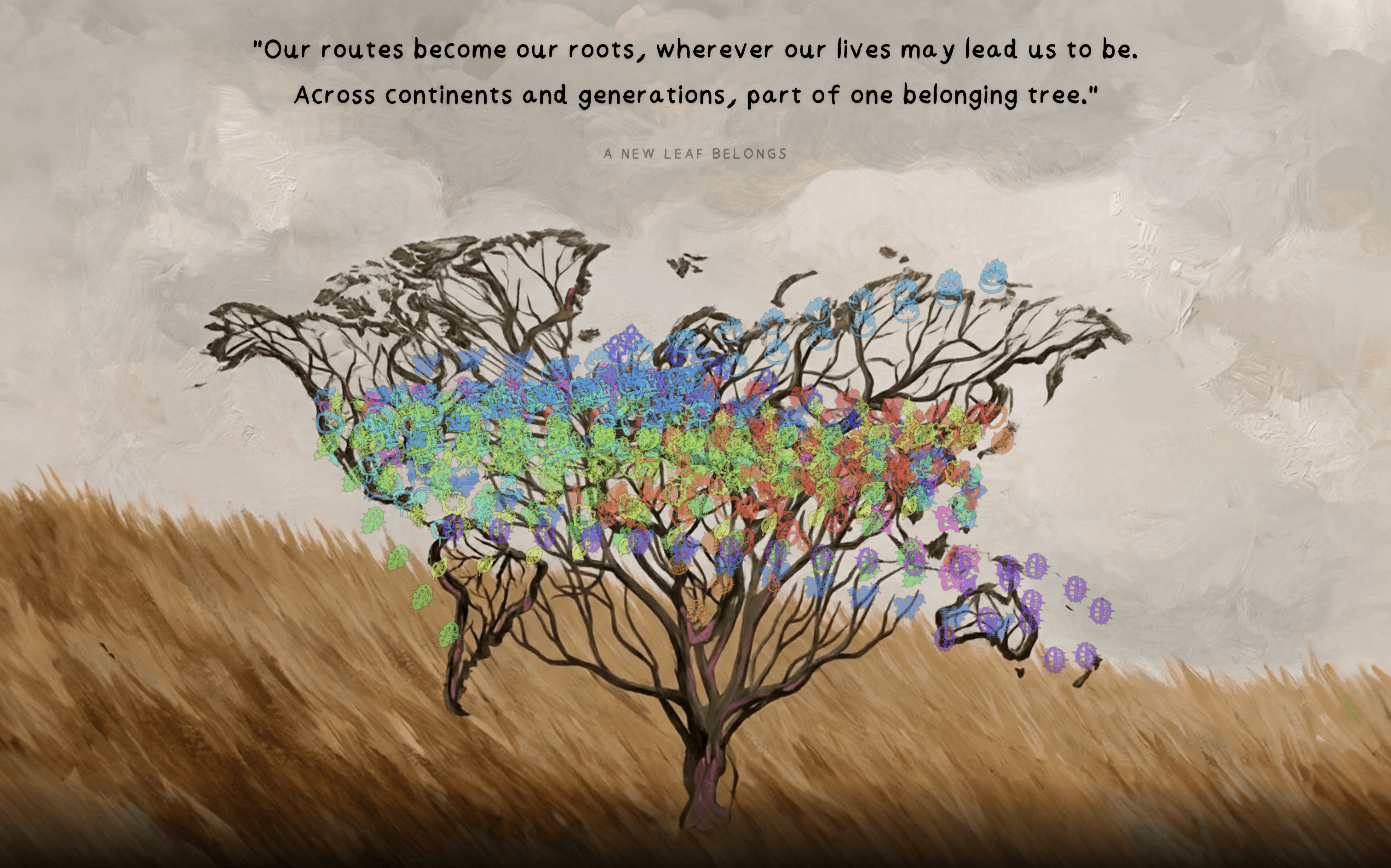
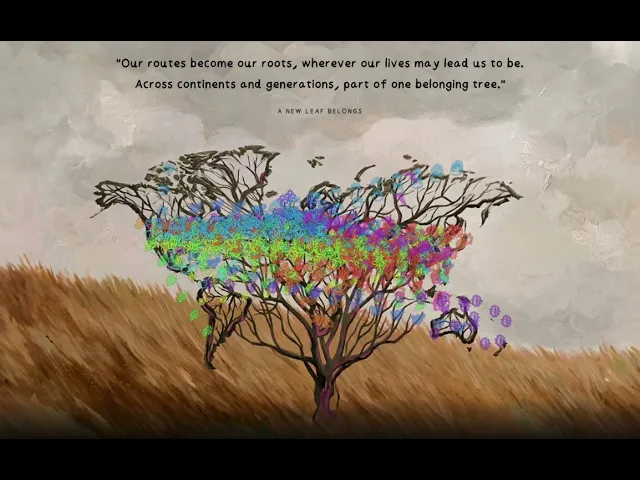
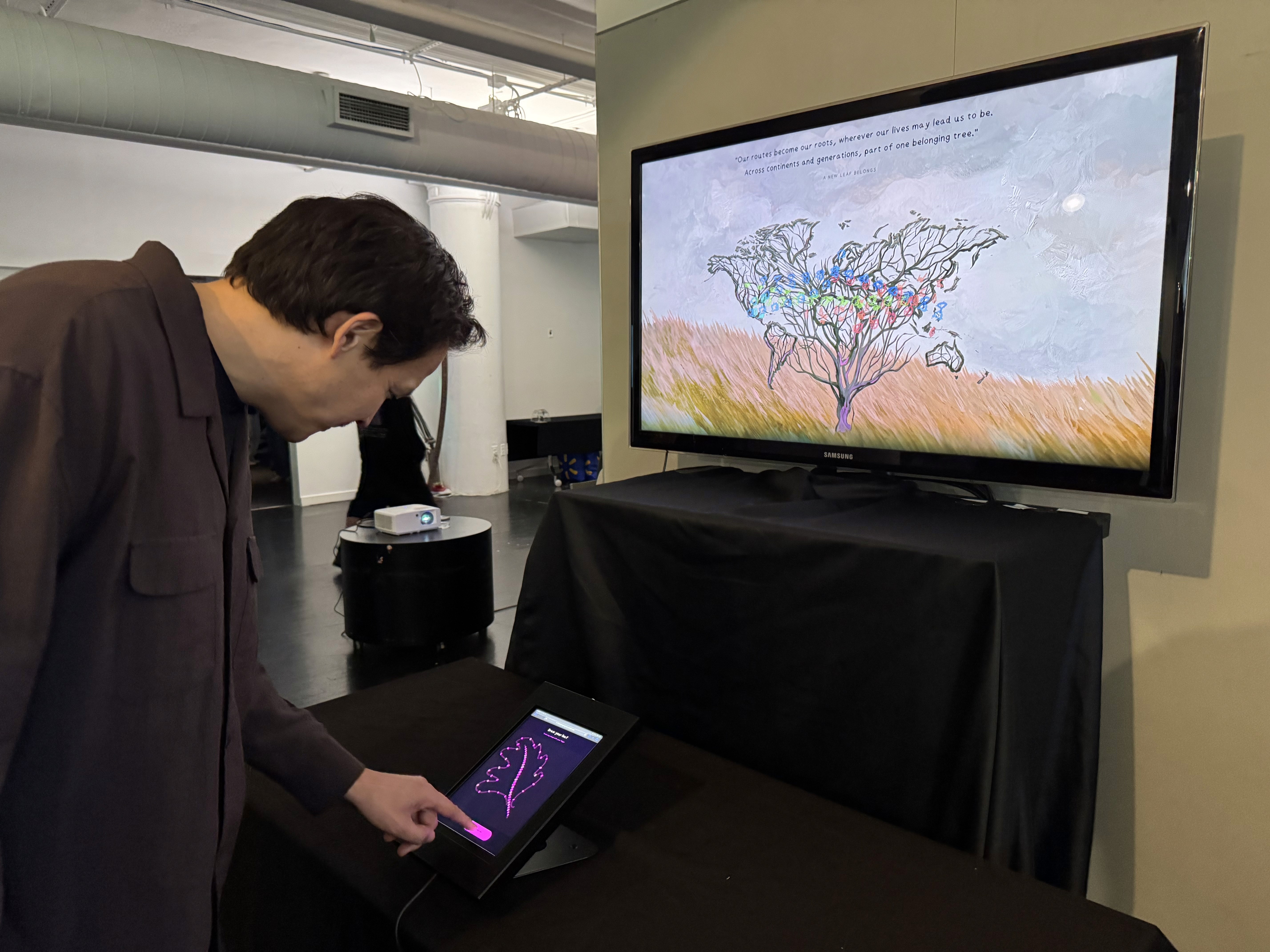
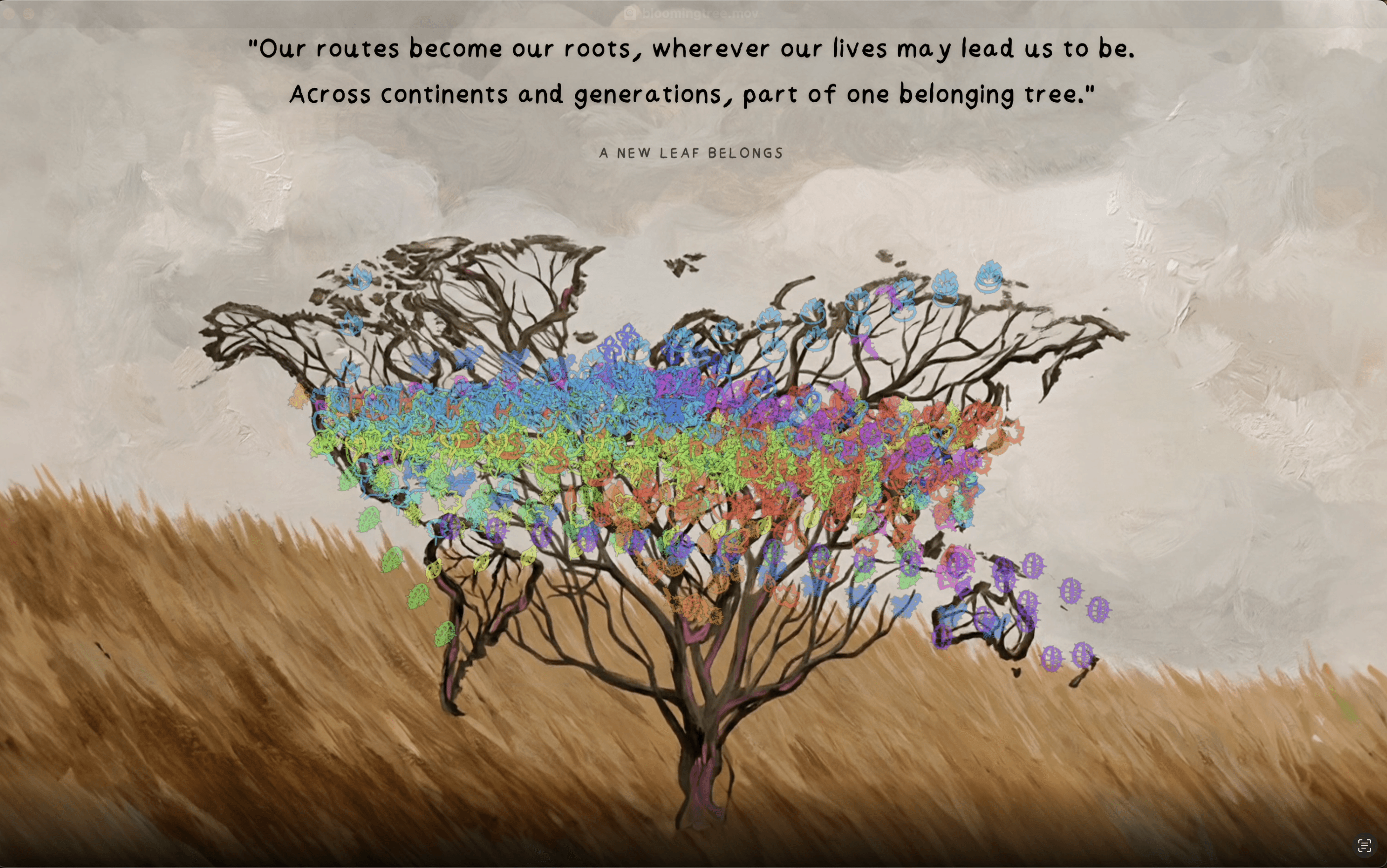
The tree map visualization is a stylized map in the form of a leafless tree oil painting of the world. There is a quote above the map that states:“Our routes become our roots, wherever our lives may lead us to be. Across continents and generations, part of one belonging tree.”
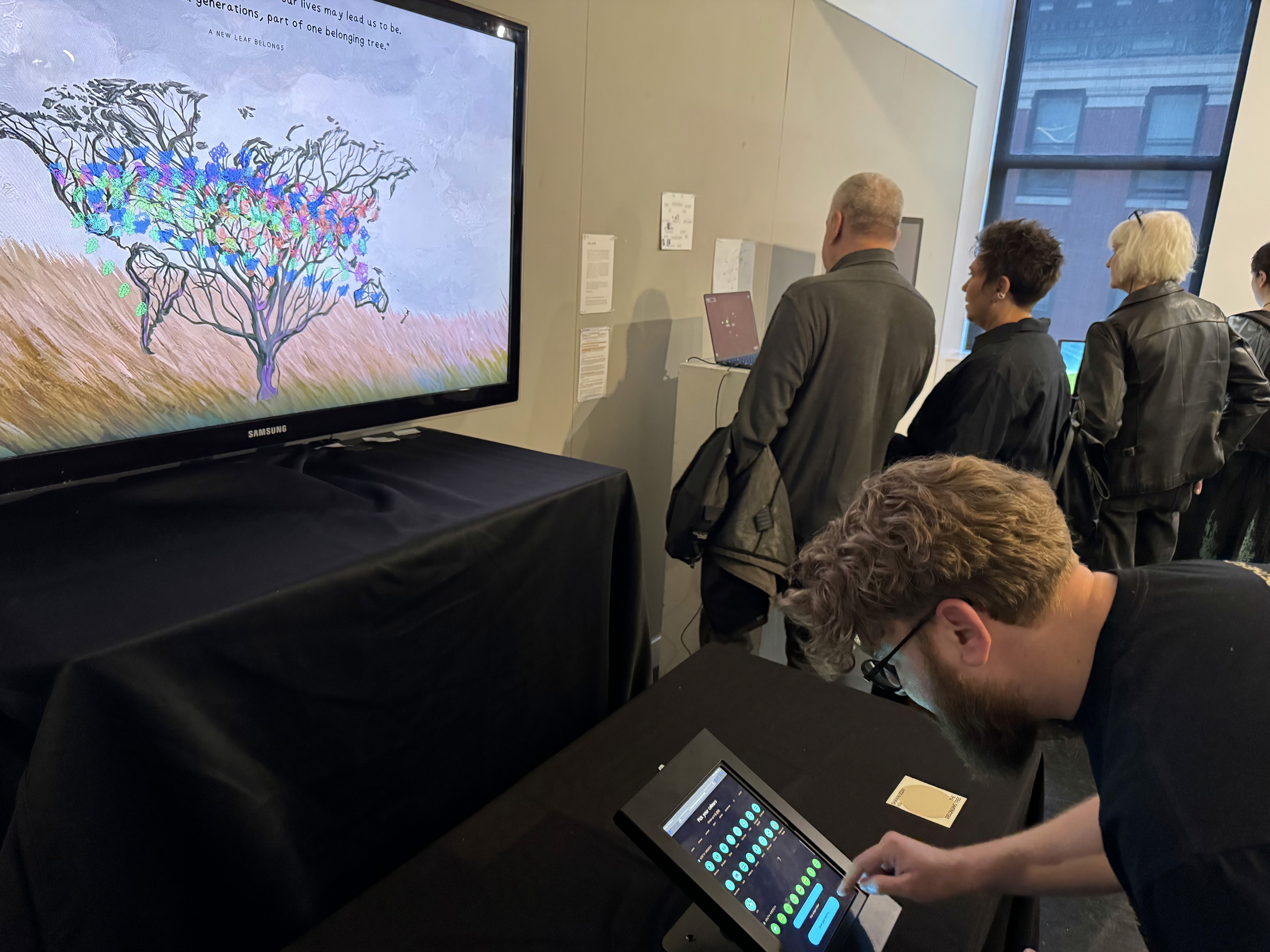
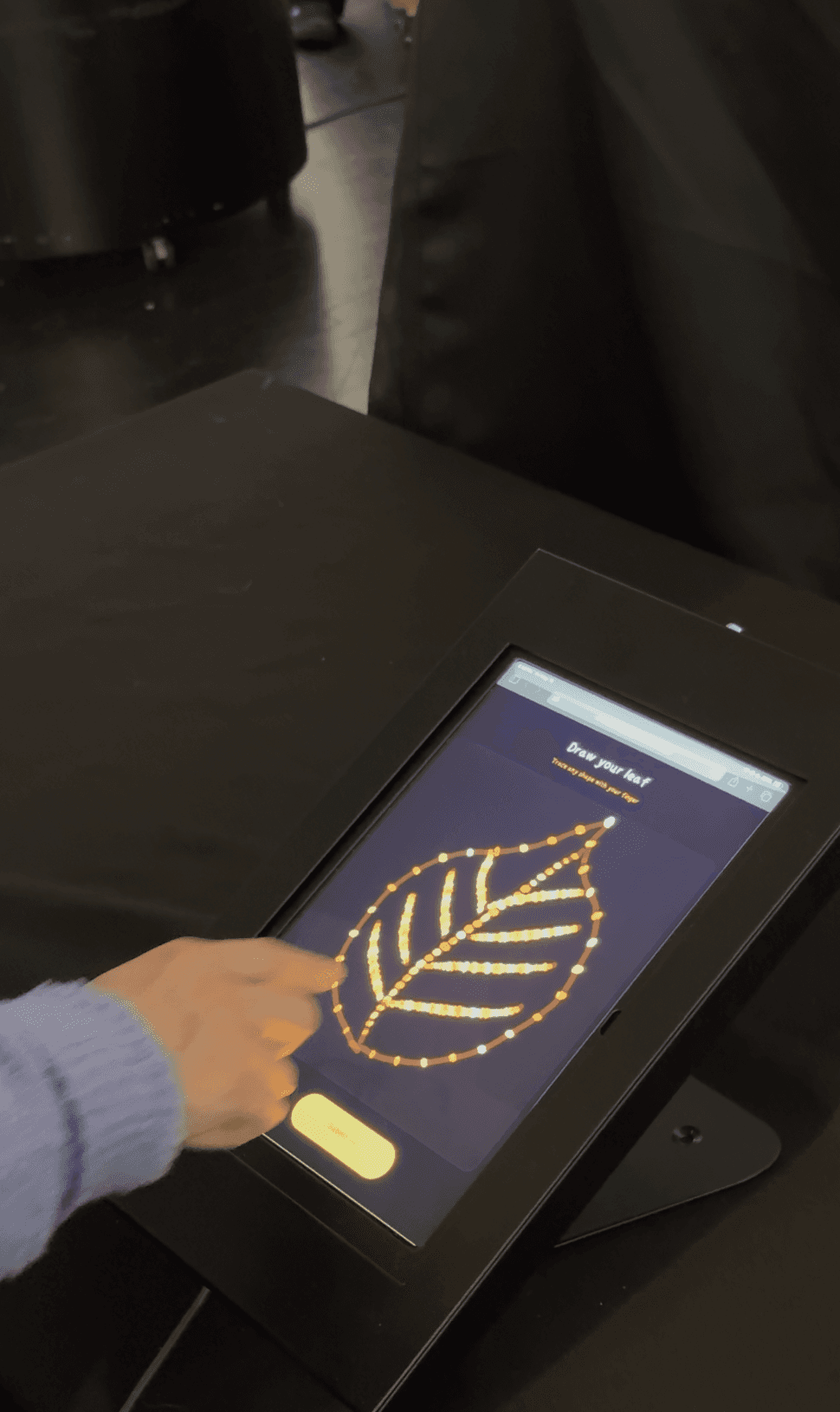
The control panel is what the user interacts with. The user selects the different countries that have shaped their sense of identity. Based on the selection of the countries, a unique color is given to the user. Using this unique color, the user then draws a leaf and hits ‘submit’. A trail of the user’ drawn leaf then appears on the tree map and the interaction comes to an end. When a new interaction happens, it builds on the leaves of the previous user.
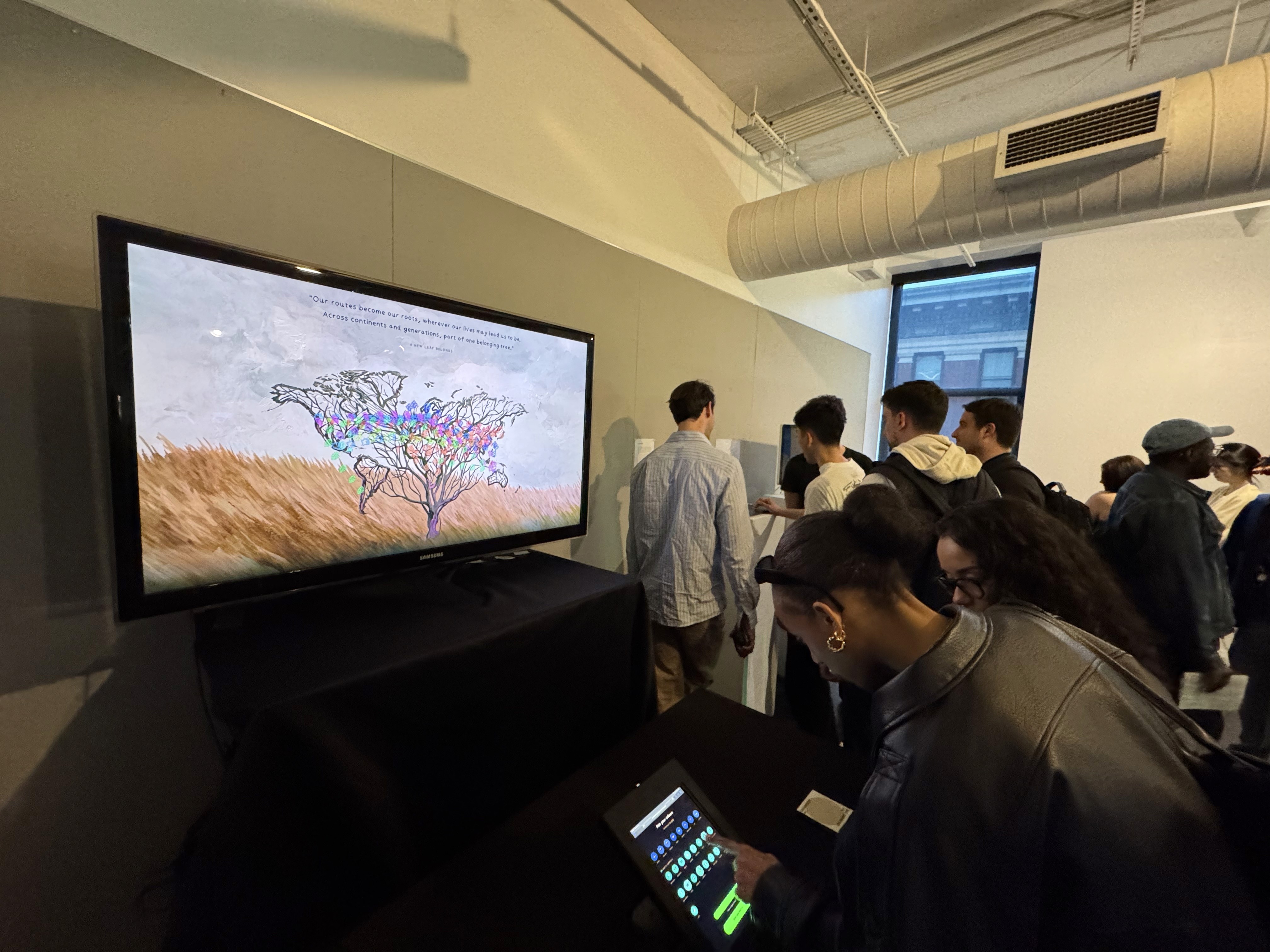
As more users participate and draw their leaf paths, the more obscure the boundaries between continents become-until all that is observable is not a world map but a single blooming tree that everyone belongs to irrespective of where they are from.
Parsons Thesis Showcase 2026
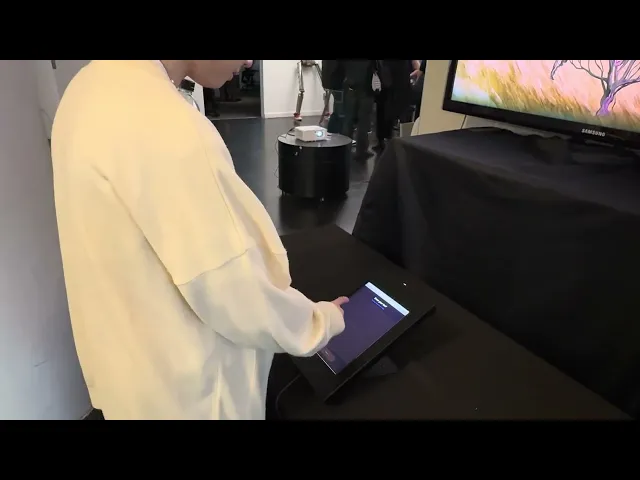
The following images and videos have been taken from the Parsons 2026 Thesis Showcase on May 15 & 16.



Results and Reflection
What began as a lifeless tree slowly transformed over the course of the exhibition. As more participants added their leaf drawings, borders between countries became increasingly obscured until the world map dissolved into a single blooming structure. The project asks whether belonging is less about one fixed place and more about the accumulation of places, memories, and movement over time.
By the end of Day 2, over 105 participants had contributed paths connecting countries across the world. Some observations that emerged from the installation:
• Nearly 70% of participants connected their identity to more than one country.
• Many participants linked identities across multiple continents, revealing how migration, education, family, and movement shape belonging.
• The most common pathways connected countries such as India + USA and China + USA reflecting both immigrant and third-culture experiences.
• Several participants connected 5–6 countries to their identity, turning each pathway into a kind of autobiographical map.
My favorite part of the show was talking with participants after they interacted with the installation and hearing their unique yet surprisingly similar stories — and how many said the project made them feel seen.
Extended Research and Process
This project was developed over the course of a year and included extensive research, interviews, speculative exploration, and multiple prototype iterations.
A full research paper and detailed process documentation are available upon request.